Short answer: air roots are the roots that grow in the humid space between the lid and the falling solution. They take in oxygen from the air, which is how a Kratky plant breathes without an air pump.
How they form
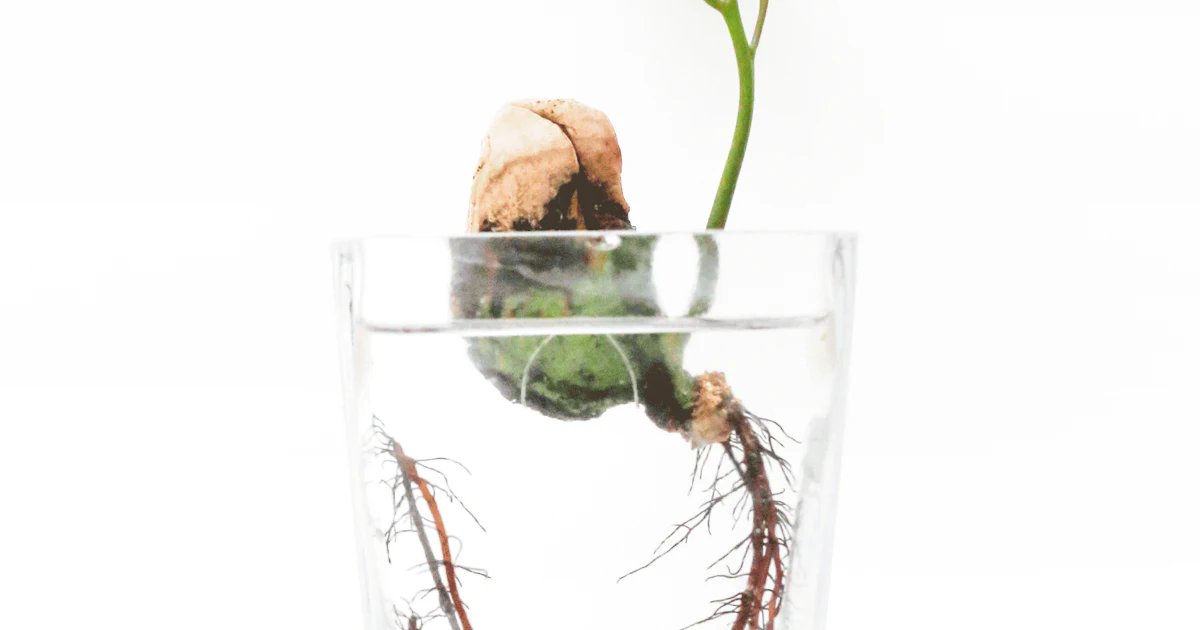
At planting, the solution touches the bottom of the net cup. As the plant drinks, the level drops and a moist air space opens and grows (Kratky, 2009). Roots follow the water down, and the part of the root system left above the surface adapts to life in humid air.
Air roots and water roots
UC Master Gardeners describe two kinds of roots in a mature Kratky container:
- Air roots, in the air space, which absorb oxygen from the humid air
- Water roots, in the solution, which absorb water and nutrients
Air roots often look finer and fuzzier, with many small branches. Water roots tend to be longer and smoother.
Why they matter
Roots need oxygen. In other hydroponic systems, pumps add oxygen to the water. In a Kratky container, oxygen comes from the air space instead, so the air roots are doing a job that equipment does elsewhere.
How to protect them
- Do not refill to the top. Raising the level back to where it started submerges the air roots, and they can rot.
- Keep humidity in. A lid that fits well keeps the air space moist so air roots do not dry out.
- Keep light out. A lightproof container prevents algae on roots and walls.
Healthy or not?
Healthy air roots are white to cream and firm. Brown, slimy roots with a bad smell point to rot, usually from warm solution or roots that were submerged.
Related guide: topping up Kratky nutrient solution.
Sources
- Kratky, B.A. (2009). Three non-circulating hydroponic methods for growing lettuce. Acta Horticulturae 843: 65–72.
- UC Master Gardeners of Orange County, UC ANR. Kratky Hydroponics: Soil-Free Growing Method.