
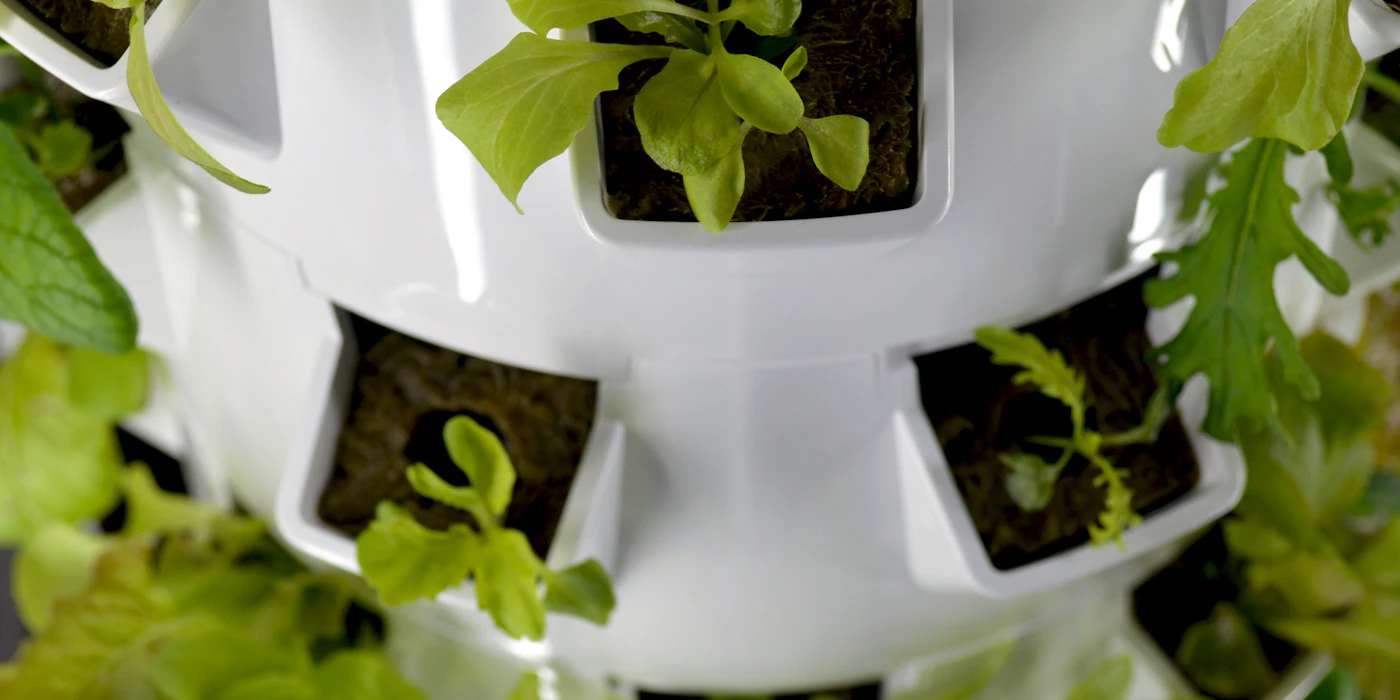
Each guide answers one question about the nutrient solution in a Kratky container, in roughly the order you meet them: what it is, what to buy, how to mix it, how to check it and how to keep it working until harvest.
For shorter answers to single questions, see the Kratky nutrient solution blog and the Kratky nutrient solution FAQ. Each guide lists its sources at the end.
The guides
- Kratky Nutrient Solution Basics: What It Contains and Why
What the solution contains and why garden fertilizer will not do the job. - Choosing a Nutrient for Kratky Hydroponics
One-part, two-part or three-part, powder or liquid, and how to read the label. - Water for Kratky Nutrient Solution
Tap, well, RO, distilled or rain water, and how hard water changes the mix. - How to Mix Kratky Nutrient Solution
Step by step: measuring, the order to add each part, and filling containers. - EC and PPM for Kratky Nutrient Solution
What the numbers mean, why ppm meters disagree, and target ranges by crop. - pH for Kratky Nutrient Solution
The range to aim for, how to test it, and how to raise or lower it. - Topping Up and Replacing Kratky Nutrient Solution
The air gap, how to top up without drowning roots, and when to start over. - Kratky Nutrient Solution by Crop
Leafy greens, herbs and fruiting plants: strength, pH and volume. - Kratky Nutrient Solution Problems and Fixes
Yellow leaves, burnt tips, algae, root rot and smelly solution. - Supplies for Mixing Kratky Nutrient Solution
Meters, test kits, pH adjusters, measuring tools and containers.
How I suggest reading the guides
If you are new to Kratky growing, I would read the first four guides in order before mixing anything: Basics, Choosing a Nutrient, Water and Mixing. Together they take about twenty minutes and cover everything you need for a first container of lettuce or herbs.
Once a crop is growing, the next three become useful: EC and PPM when you want to know how strong your solution really is, pH when you are adjusting or troubleshooting, and Topping Up when a container runs low before harvest.
The last three are for planning and fixing. By Crop lists strength and pH ranges side by side, Problems and Fixes walks through symptoms in the order I check them, and Supplies covers what is worth buying and what can wait.
How the guides are written
I write every guide from published sources: Bernard Kratky's own research on the non-circulating method, university extension publications such as those from Oklahoma State University, UF/IFAS and UC Master Gardeners, and equipment makers' documentation where it explains how their meters work. Figures are credited where they appear, and each guide ends with its sources. Where two sources give different numbers, as they do for pH, I show both and explain which one I use and why.
Short answers
Not every question needs a full guide. If you are after one specific answer, such as how to convert EC to PPM, how much vinegar lowers pH, or whether to dechlorinate tap water, the blog articles are shorter and more focused. Each one links back to the guide that covers its topic in depth.
Where to start, depending on where you are
You have not mixed anything yet
Read Basics and Choosing a Nutrient, buy a complete hydroponic nutrient and a pH test kit, then follow Mixing step by step. Start with lettuce or basil; both are forgiving, finish quickly and show you how the method behaves in a few weeks.
Your first crop is growing
Leave it alone as much as you can. Check it weekly, note the solution level and look at the newest and oldest leaves. If something looks off, go to Problems and Fixes before changing anything; it lists the order to check pH, strength, level and roots.
A container is running low
Read Topping Up before adding anything. The one rule that matters most is never to refill to the top once air roots have formed.
You want to grow something other than greens
Start with By Crop for strength and pH ranges, then EC and PPM so you can hit those ranges with a meter. Fruiting crops are a good second project once you are comfortable measuring.
Your tap water seems to cause trouble
Go to Water. Hard water, softened water and well water each change how a solution behaves, and a single measurement of your plain water explains most surprises.
You are deciding what to buy
Supplies sets out what is essential, what is strongly recommended and what can wait, so you can start small.
Whichever guide you start with, keep notes. The date, EC and pH of each batch, the container size and how the crop turned out will teach you more about your own water, light and temperature than any single guide can.