
Kratky Nutrient Solution by Crop
The same basic solution works for most Kratky crops. What changes from crop to crop is how strong to mix it, how much each plant needs and how long the solution has to last.
Leafy greens
Lettuce and other greens are the crop the Kratky method was developed for (Kratky, 2009). They grow fast, use relatively little water and are usually ready 30 to 45 days after planting (UC Master Gardeners, UC ANR).
- Lettuce: EC 1.2–1.8 mS/cm, pH 6.0–7.0
- Spinach: EC 1.8–2.3, pH 6.0–7.0
- Pak choi: EC 1.5–2.0, pH about 7
Ranges from Oklahoma State University Extension. Note that UF/IFAS recommends a slightly lower pH, 5.5–6.0, for Kratky greens. Plan on about 1 to 1.5 gallons of solution per plant (UF/IFAS).
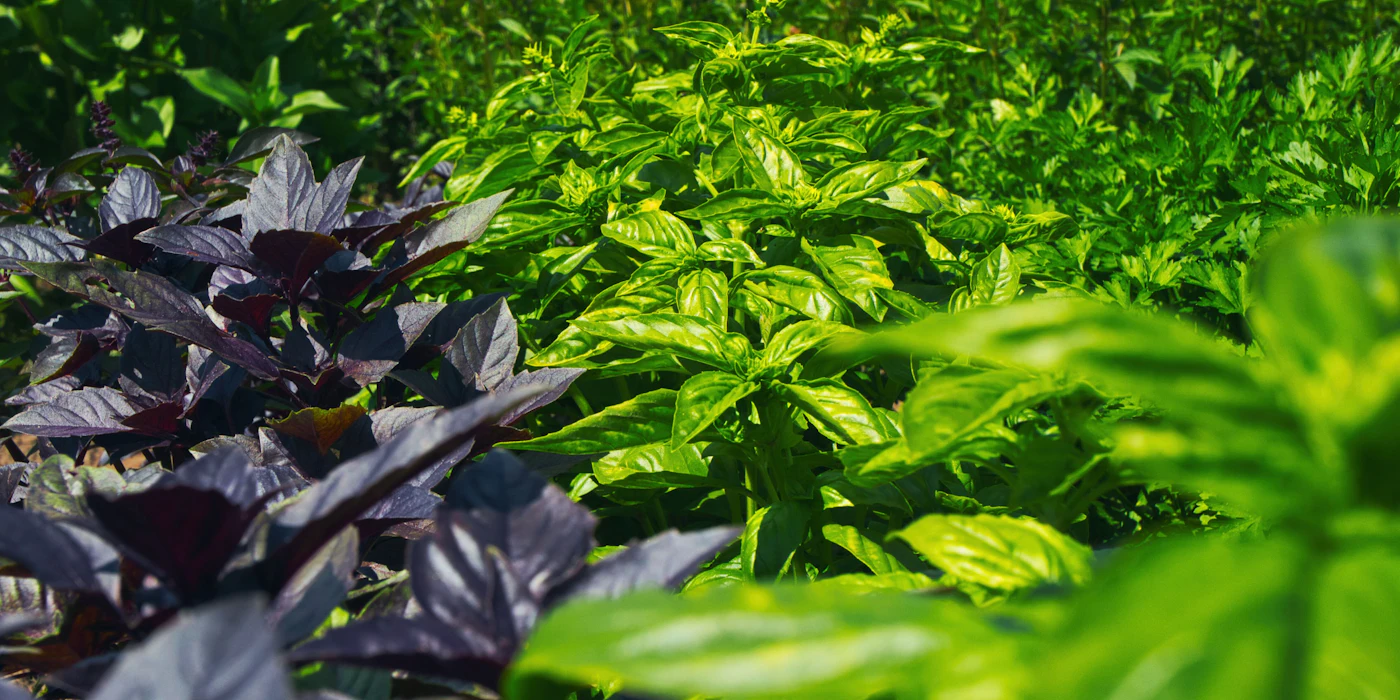
Herbs
- Basil: EC 1.0–1.6, pH 5.5–6.0
- Sage: EC 1.0–1.6, pH 5.5–6.5
- Parsley: EC 1.8–2.2, pH 6.0–6.5
Ranges from Oklahoma State University Extension. Herbs that are harvested repeatedly stay in the container longer than lettuce, so give them a larger container or expect to top up carefully.
Fruiting plants
- Strawberry: EC 1.8–2.2, pH about 6
- Cucumber: EC 1.7–2.0, pH 5.0–5.5
- Peppers: EC 0.8–1.8, pH 5.5–6.0
- Tomato: EC 2.0–4.0, pH 6.0–6.5
Ranges from Oklahoma State University Extension. Fruiting plants grow for months and use much more water. They usually need the solution replenished over time (UC Master Gardeners, UC ANR), so use the largest container you can and follow the topping-up rules.
Mixing several crops
Crops that share a container share a solution. Group plants with similar strength and pH needs, such as lettuce with other greens, and keep heavier feeders like tomatoes in their own containers.
A note on these ranges
Published ranges come from hydroponic production in general, not only Kratky systems, and sources differ. Use them as a starting point, follow your nutrient label, and let the plants' growth guide small changes in your next batch.
Sources
- Kratky, B.A. (2009). Three non-circulating hydroponic methods for growing lettuce. Acta Horticulturae 843: 65–72.
- Dunn, B. and Singh, H. Oklahoma State University Extension. Electrical Conductivity and pH Guide for Hydroponics (HLA-6722).
- University of Florida IFAS Extension. Set It and Forget It Hydroponics (HS1488).
- UC Master Gardeners of Orange County, UC ANR. Kratky Hydroponics: Soil-Free Growing Method.
