
Short answer: aim for an EC around 1.2 to 1.8 mS/cm and a pH around 5.5 to 6.5. UF/IFAS suggests about 1.25 mS/cm and pH 5.5 to 6.0 for Kratky growing.
What the sources say
- Oklahoma State University Extension: EC 1.2–1.8 mS/cm, pH 6.0–7.0 for hydroponic lettuce
- UF/IFAS: about 1,250 µS/cm (1.25 mS/cm), or about 800 ppm, and pH 5.5–6.0 for non-circulating systems
The ranges overlap. Starting near 1.2–1.4 mS/cm and pH 5.8–6.0 sits comfortably inside both.
Why lettuce suits Kratky
Lettuce was the crop Kratky used to develop the method. It grows quickly, uses relatively little water and is usually harvested 6 to 7 weeks after seeding, before the solution runs out (Kratky, 2009).
How much solution
Plan on about 1 to 1.5 gallons per plant from seed to harvest (UF/IFAS). One plant per gallon-sized container is a common setup.
Nutrient choice
A complete hydroponic nutrient for leafy or vegetative growth, or an all-purpose hydroponic formula, works well (UF/IFAS). Our sister site Kratky Lettuce covers lettuce nutrients for Kratky hydroponics in more depth.
Signs the mix is off
- Pale, slow-growing plants: solution may be too weak, or nitrogen is running low near harvest.
- Brown outer leaf edges: often a solution that is too strong (UMass Extension).
- Brown tips on inner young leaves (tipburn): linked to calcium not reaching fast-growing leaves, often worsened by warm conditions (UMass Extension).
- Pale new leaves with green veins: often iron shortage caused by high pH.
Related guide: Kratky nutrient solution by crop.
How I mix a lettuce batch
For lettuce I mix at about 1.3 mS/cm and bring the pH to about 5.8. That sits inside Oklahoma State University Extension's range of 1.2 to 1.8 mS/cm and right beside the UF/IFAS Kratky target of about 1.25 mS/cm with pH 5.5 to 6.0. I aim slightly low on strength because the solution left in the container can concentrate as the plant drinks, especially in warm weather.
I fill each container so the solution just touches the bottom of the net cup and then leave it alone. Lettuce is the crop the method was designed around, and in Kratky's trials it was harvested before the solution ran out (Kratky, 2009).
Head lettuce and leaf lettuce
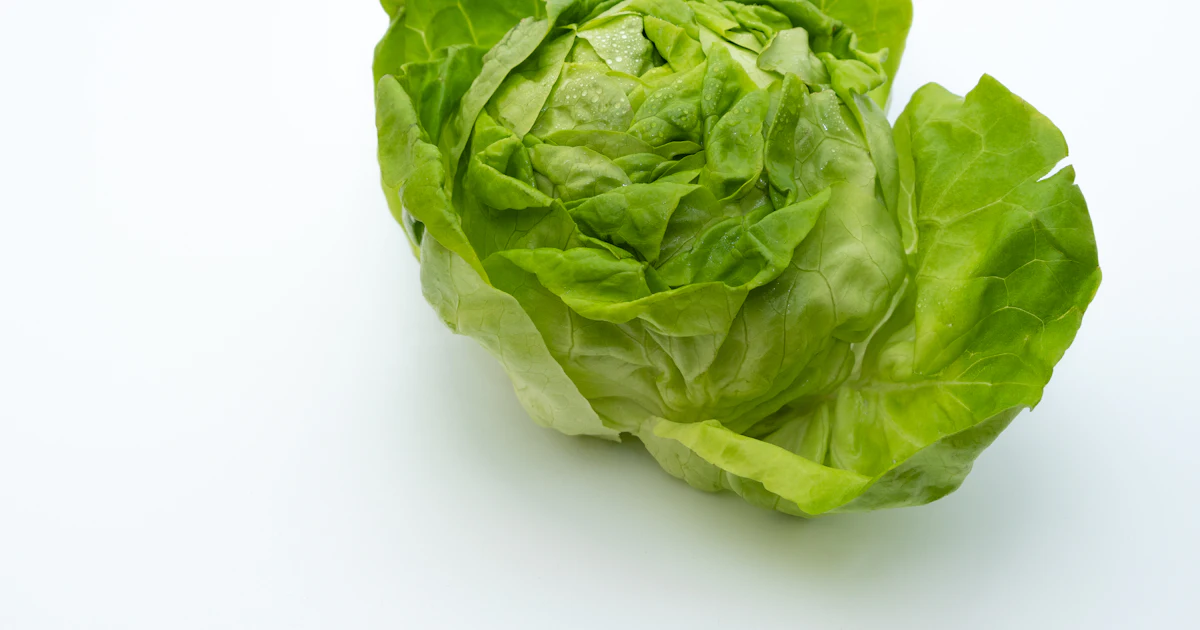
Loose-leaf and butterhead types are the easiest Kratky lettuces in my view: they size up quickly and fit comfortably in a gallon-sized container. Larger head types take longer to fill out and use more solution, so they benefit from a container at the upper end of the 1 to 1.5 gallons per plant UF/IFAS suggests. If you harvest leaf lettuce a few leaves at a time rather than cutting the whole plant, it stays in the container longer, so allow extra volume for that too.
Tipburn in more detail
Tipburn is the problem I see raised most often with hydroponic lettuce. UMass Extension describes two forms. Browning on the inner, youngest leaves is linked to calcium not reaching the fast-growing leaf tips, which is often an environmental issue such as heat or fast growth, rather than a lack of calcium in the solution. Browning on the outer leaf edges is more often caused by high soluble salts, meaning a solution that is too strong. The first suggests cooling and slowing things down; the second suggests checking EC and diluting.
Bolting and bitterness
Lettuce that starts to stretch upward and form a central stalk is bolting, usually in response to heat and long days rather than anything in the solution. Leaves often turn bitter at that point. Growing in a cooler spot and harvesting on time does more than any change to the nutrient. Keeping the solution in Oklahoma State University Extension's 72 to 75 °F range helps the roots as well.
A simple lettuce routine
- Mix a gallon or more of solution at about 1.3 mS/cm and pH 5.8.
- Fill a lightproof container so the solution touches the bottom of the net cup.
- Check the plant weekly; avoid lifting the cup more than needed.
- Harvest at 30 to 45 days, the range UC Master Gardeners give for leafy greens.
- Empty, clean and rinse the container, and start the next plant on fresh solution.
For the full mixing method see how to mix Kratky nutrient solution, and for scaling the dose to jars see measuring nutrient doses for mason jars.
Quick questions
Can I regrow lettuce in the same solution?
Cutting the outer leaves and letting the center regrow can work for leaf types, but the plant keeps drinking the same solution, so check the level and EC before expecting a second harvest.
Sources
- Dunn, B. and Singh, H. Oklahoma State University Extension. Electrical Conductivity and pH Guide for Hydroponics (HLA-6722).
- University of Florida IFAS Extension. Set It and Forget It Hydroponics (HS1488).
- Kratky, B.A. (2009). Three non-circulating hydroponic methods for growing lettuce. Acta Horticulturae 843: 65–72.
- UMass Extension Greenhouse Crops and Floriculture. Hydroponic lettuce tipburn.